//

George Alabi

Mechatronic Systems Engineer

University of Detroit Mercy • May 2028 • Detroit, MI • CGPA: 3.56

I love bringing ideas to life through designs and simulations. Design to me is the cross-section of engineering and the arts, and simulation the bridge between the virtual world of design and the real-world.

About Me

Mechatronics, robotics, automation, and design.

Results-driven Mechatronics Engineering student with a passion for robotics and automation. Skilled in designing, developing, and testing robotic systems by integrating mechanical, electrical, and software components. I combine hands-on hardware integration with strong software development skills and analytical capabilities to solve complex engineering problems. Experience includes lab assistance, STEM instruction, and full-stack development.

Skills

Robotics Design & DevelopmentCAD & SolidWorksEmbedded Systems C/C++PythonArduinoMATLAB3D Printing Control SystemsSensor IntegrationCircuit Design

You can rotate, ZOOM In and expande the 3d designs

Spare a few seconds for the designs to load

Rotor

Mechanical ENGINEERING

Course

Basic Engineering Graphics and Computer Aided Design (ENGR 1020)

Overview

A rotor is the moving component of an electromagnetic system that receives electical energy produced from a stator's magnetic field and then transmits mechanical power through the system.

🛠

Designed with

SolidWorks

Parts

  1. Shaft
  2. Core plates
  3. Coil windings
  4. Metal Contacts
  5. Contact holders

DC Motor

ELECTROMECHANICAL Engineering

Course

Basic Engineering Graphics and Computer Aided Design (ENGR 1020)

Overview

A DC motor is an electrical device that converts electrical energy from a DC source to mechanical energy through electromagnetic principles.

🛠

Designed with

SolidWorks

Parts

  1. Motor housing
  2. End contact
  3. Magnet
  4. Spacer
  5. Bushings
  6. Rear cover
  7. Spur gear

Servo Motor

ELECTROMECHANICAL Engineering

Course

Basic Engineering Graphics and Computer Aided Design (ENGR 1020)

Overview

This servo motor is a rotary actuator that enables the precise control of angular position, velocity and acceleration.

🛠

Designed with

SolidWorks

Parts

  1. Servo motor housing
  2. DC Motor
  3. Integrated Circuit
  4. Position Potentiometer
  5. Multiple gears

Interbotix X-Series Robotic Arm

Robotics

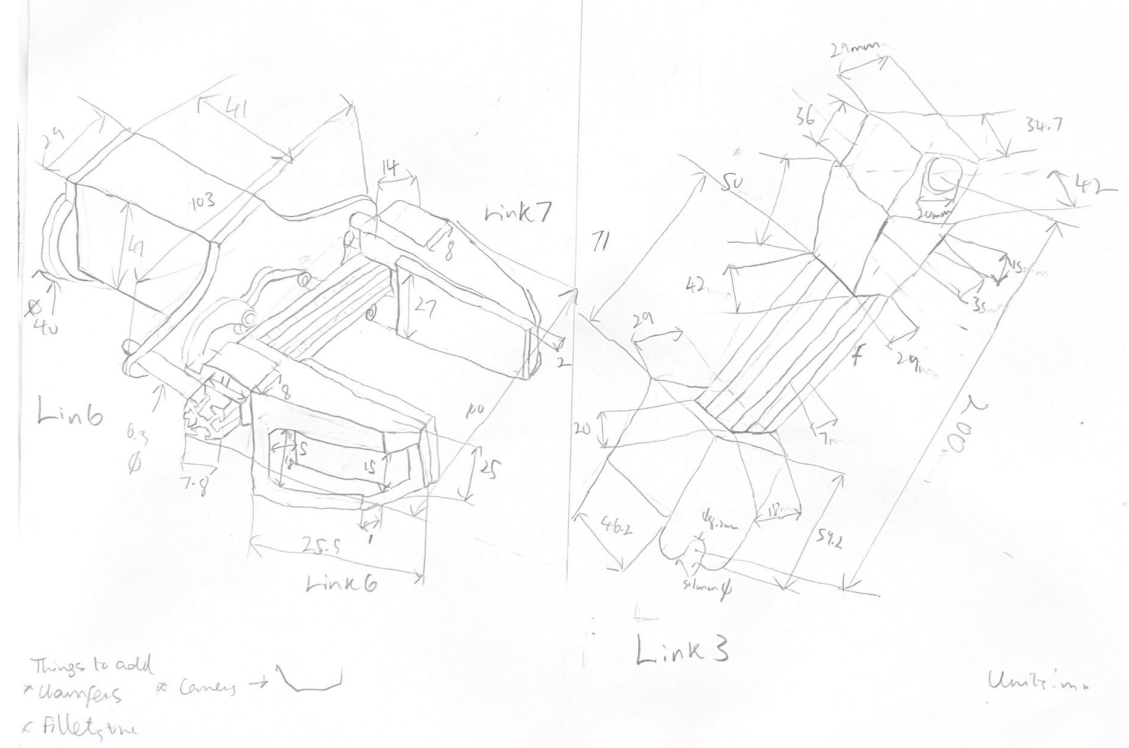
Hand sketches of Link 3 and Link 6
Hand Sketches of Link 3 and Link 6

Designed with

Solidworks

Course

Robotics (MENG 4900)

Overview

This designed was made by from hand-made measurements of the Interbotix X-series arm which was translated into a CAD model. This was part of a larger project, developing a Robotics 3D Visualisation and Control Application.

More Details

Performed

  1. Manual measurements
  2. Hand-made sketches
  3. SolidWorks design

Partner

Ziyuan Zhao, Robotics and Mechatronic Systems Engineering Major

Air Hockey Score Board

eLECTRONICS Design & manufacturing

Bill of Materials

Course

Electronics Manufacturing (ELEE 4590)

Overview

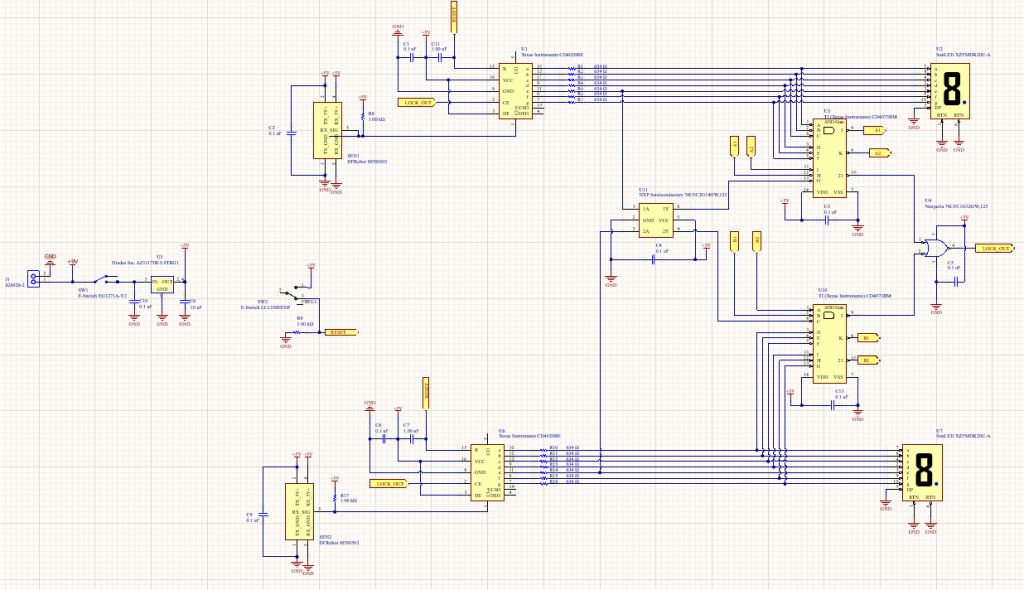
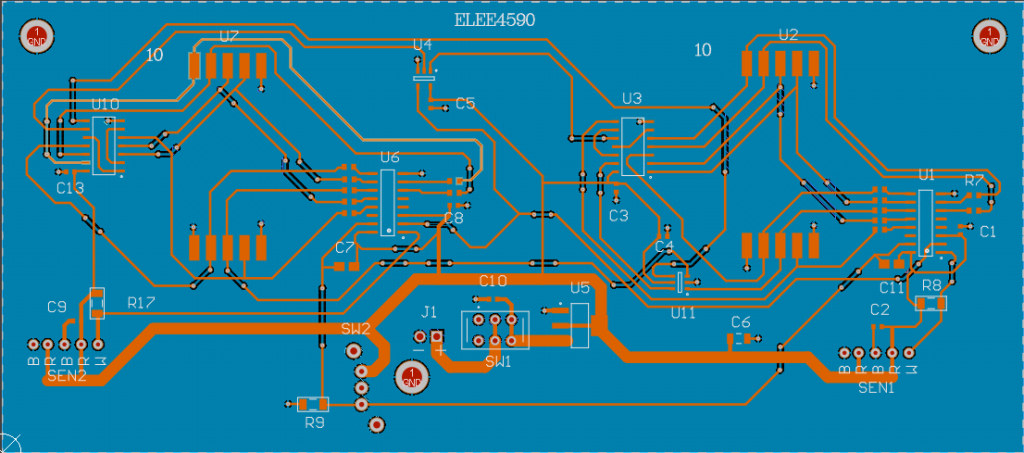
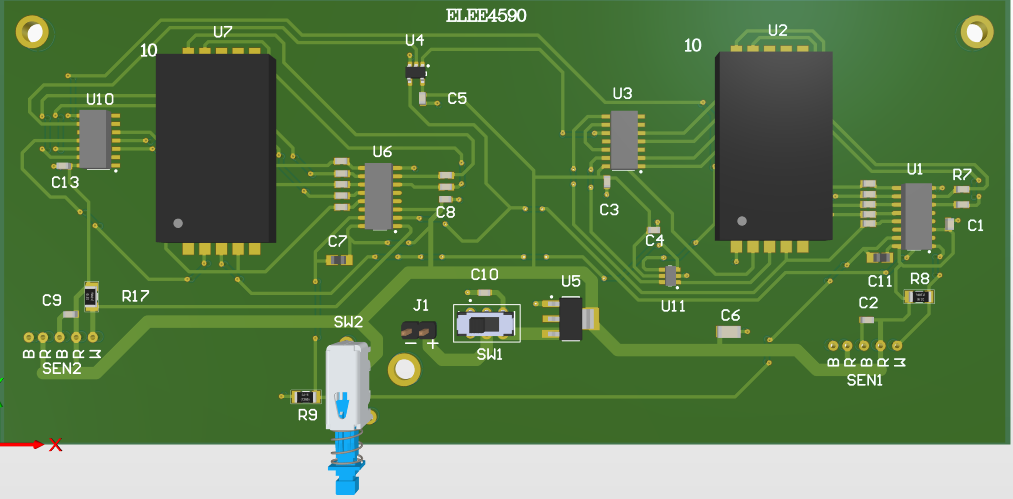
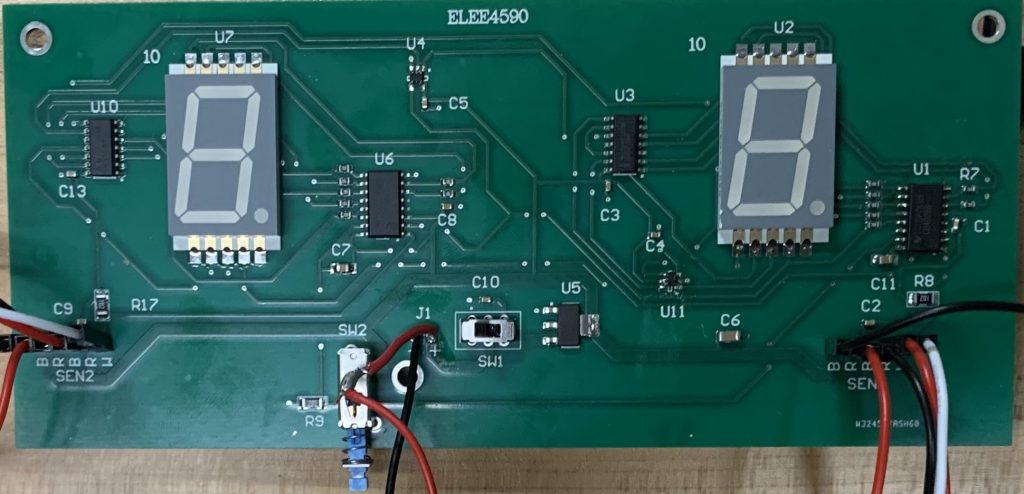
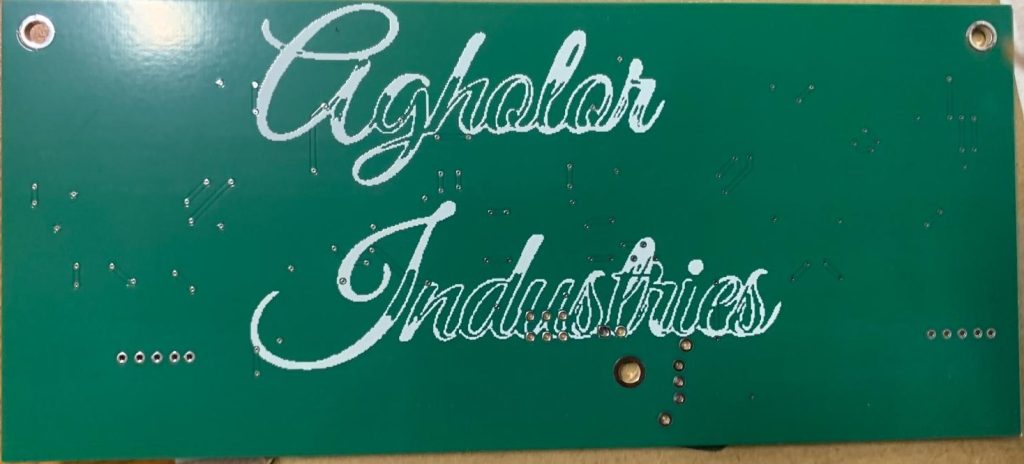
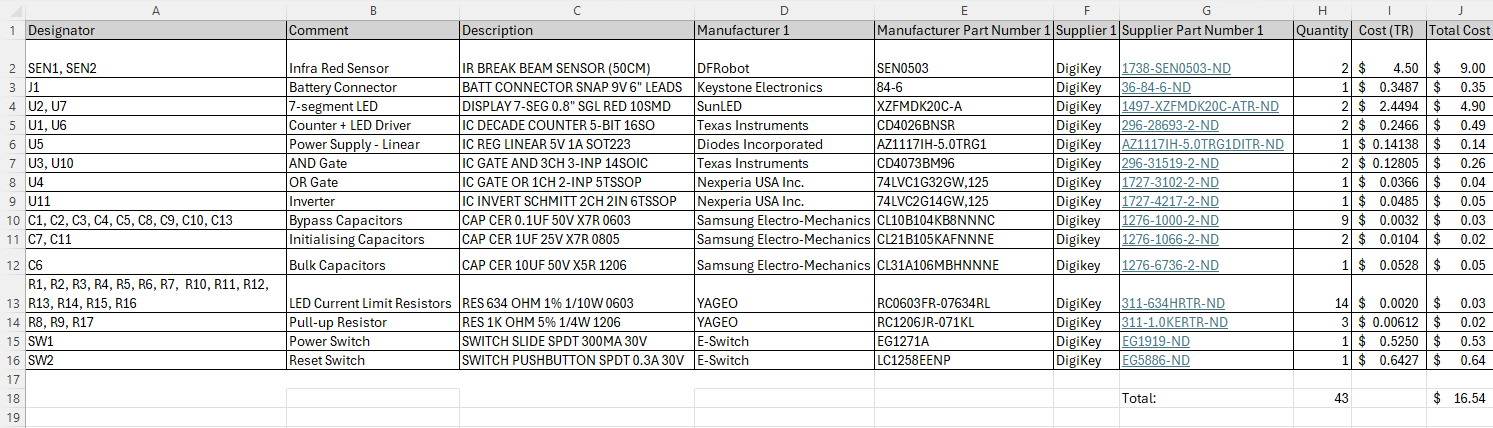
Designed a cost-effective Air Hockey Score Board using the knowledge of Digital logics, Electrical Circuit design and Electronics development. With a projected total production cost of $23.15, the board is cheaper than the baseline design by 40.38%.

Fusion Thermal Cup

product development

Fusion Thermal Cup

Course

Computer Aided Engineering (ENGR 4920)

Overview

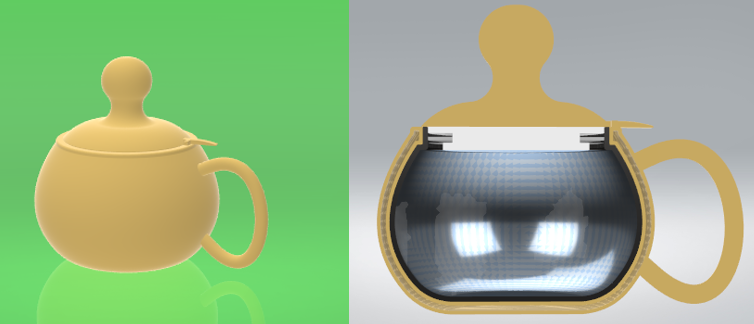
The Fusion thermal cup was inspired by Nigerian and Chinese Culture and is presented as a product called the Delang thermal cup (a combination of letters from our state and province of origin). It meant for use for storing liquids and to be accessible by persons with hand/arm-related disabilities. The cup has good thermal insulation as Calabash is a good insulator.

It takes about It takes about 52 minutes (very close to an hour) for the average temperature of water to drop by 30 degrees Fahrenheit from 130 degrees Fahrenheit. This was determined through SolidWorks Thermal Simulation.

Designed with

SolidWorks

Parts & Design

  1. Double wall made of Calabash (native to Nigeria)
  2. Main body based on Chinese cups and the lid of Nigerian Calabash lids
  3. Internal Layer that contacts with liquid, made off AISI 304, a stainless steel alloy
  4. Finger mechanism for single hand opening of the thermal cup (Ease of use for persons with hand/arm-related disabilities

Partner

Yuchen Gao, Robotics and Mechatronic Systems Engineering Major

74LS93 Counter Integrated Circuit (IC)

eLECTRONICS: Digital logics

Course

Digital Logics & its Lab (ELEE 2640 & 2650

Overview

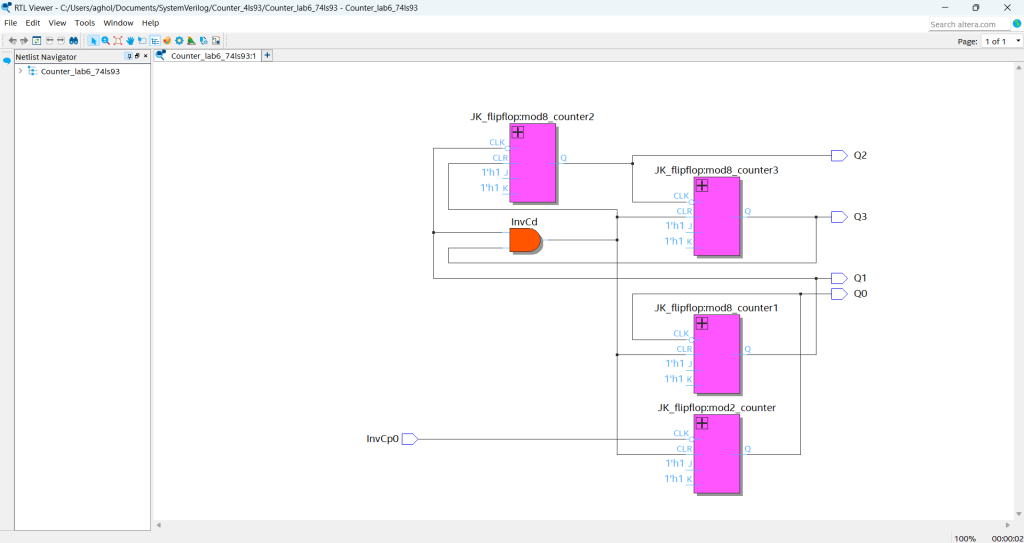
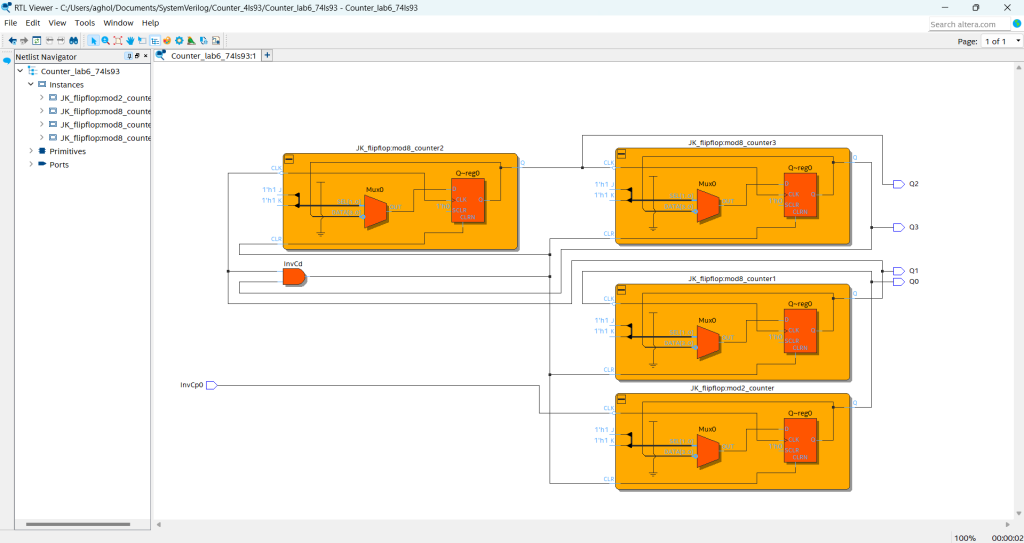
Counters such as 74ls93 are sequential circuits which can be designed with JK flip-flops and simulated using the Quartus application. These sequential circuits go through a defined sequence of states upon the application of input impulses.

Designed with

  1. System Verilog
  2. VHDL
  3. Quartus Prime
GitHub

Performed

  1. Recreated the counter using System Verliog and VHDL on the Quartus prime software.
  2. A JK flipflop was developed and then used as a module incorporated 4 times to produce the counter and achieve its functionality.
  3. Performed a simulation testing the Counter IC design, achieving the same results as specified by the manufacturer truth table.

Field-controlled DC motor

Controls engineering

Course

Control Systems (ENGR 4220)

Developed with

  1. Simulink
  2. MATLAB

Overview

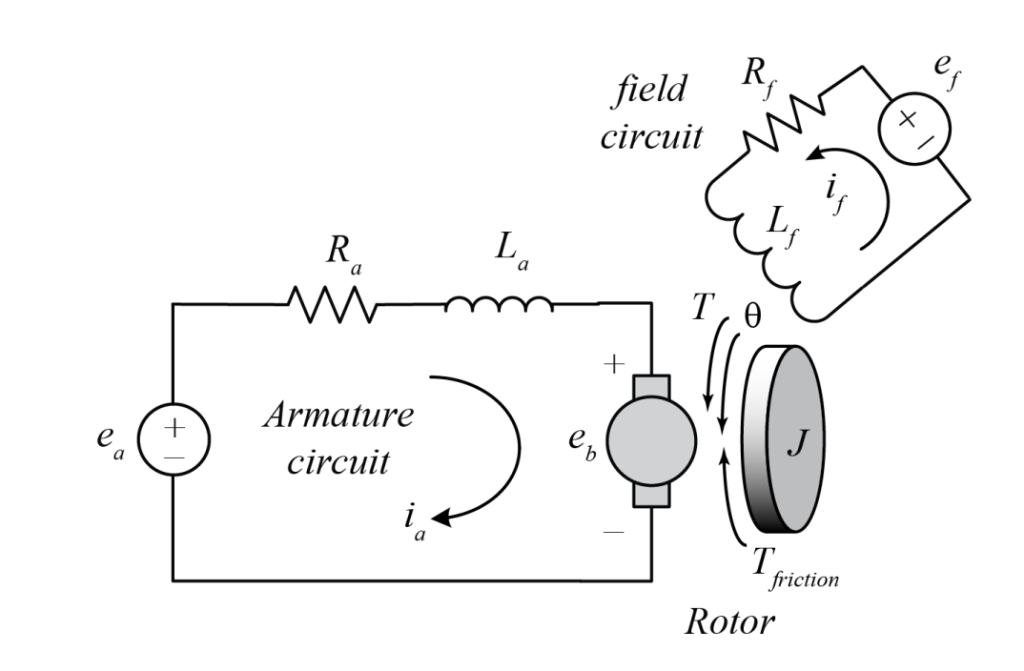
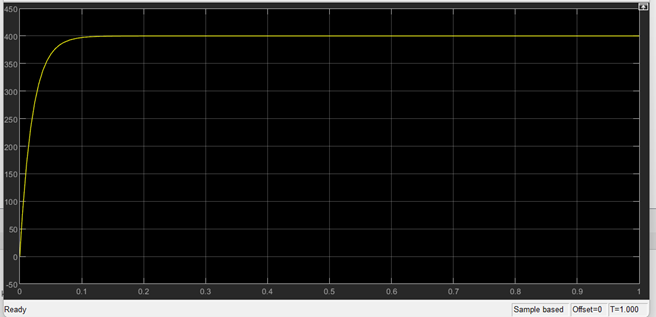
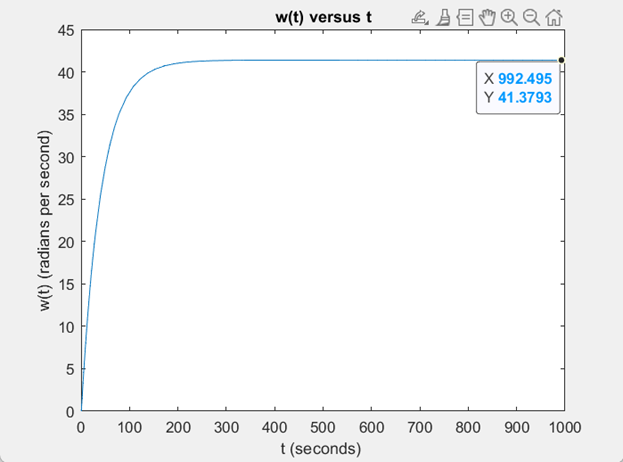
The field-controlled DC motor has a constant armature voltage (ea) constant, and its speed the speed is controlled by varying the strength of the magnetic field. This is controlled by the field voltage (ef) . The armature circuit has a back emf due to the rotation of the armature. However, the field circuit is stationary; so it has no back emf.

Performed

  1. Derived a non-linear differential equation model from the schematic
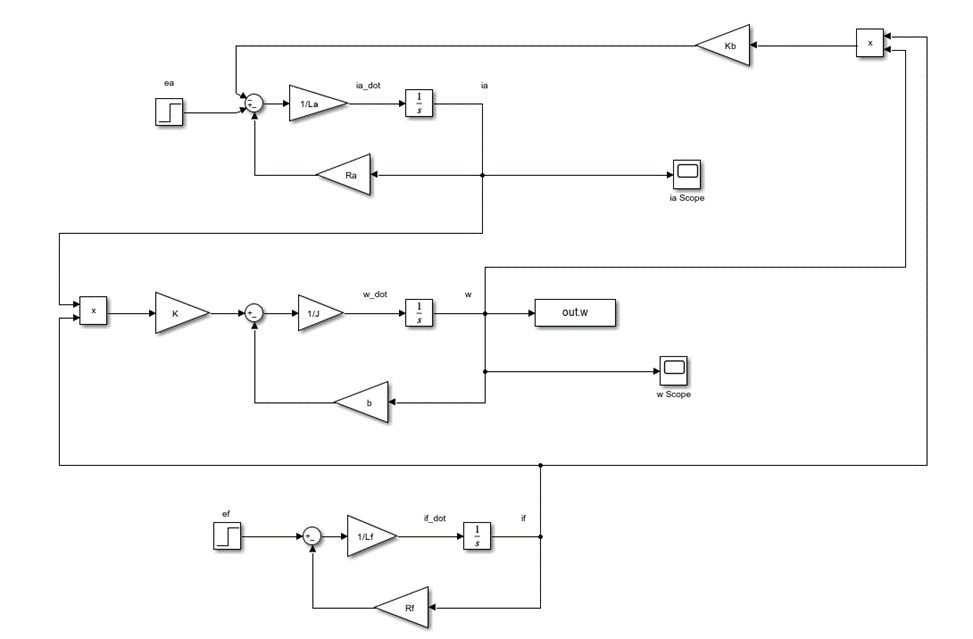
  2. Used Simulink to create a model and simulation
  3. Loaded values of constants in the model from a MATLAB script
  4. With Matlab some of the simulation results were formatted

Constant Parameters

  1. Rf = 240 Ω
  2. b = 0.02 Nm/rad/s
  3. Lf = 120 H
  4. K = 0.0025 Nm/A^2
  5. J = 1 kg-m^2
  6. La = 0.012 H
  7. Ra = 0.6 Ω
  8. Kb = 1 V-s/rad

Simplified Automobile Model

Controls engineering

Course

Control Systems (ENGR 4220)

Designed with

  1. Simulink
  2. MATLAB

Overview

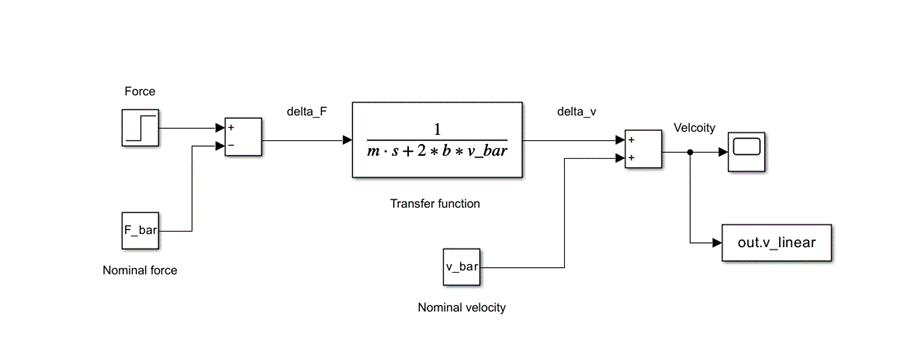
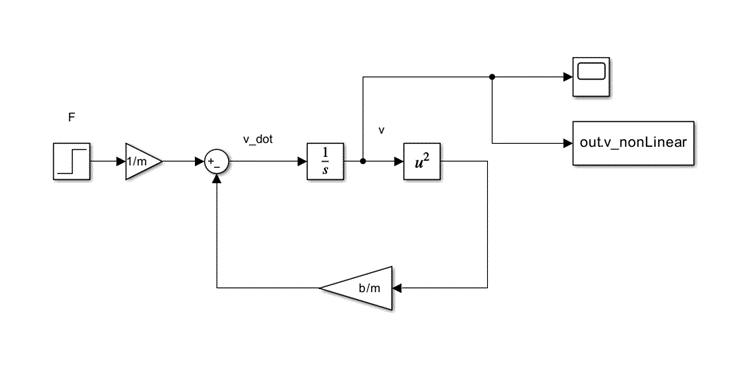
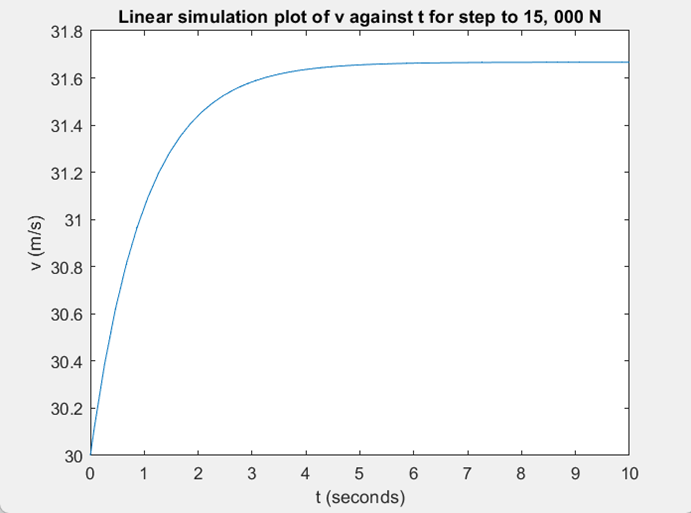
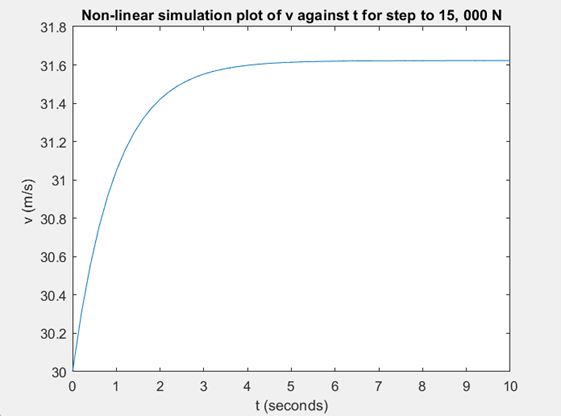
An automobile can be very simplified by a model that only has the interaction between two forces upon the body of the car., the force that propels the car forward and drag.

Constant Parameters

  1. m = 900 kg
  2. b = 15 kg/m
  3. F¯ = 13, 500 N
  4. v¯ = 30 m/s

Performed

  1. Designed a a non-linear differential equation model from the differential equation model
  2. Produced a linear transfuction model from the linearised version of the differential equation
  3. Used Matlab to format the simulation results
  4. Loaded values of constants in the model from a MATLAB script

Conclusion

The linearized model had identical results with the non-linear simulink model (the more realistic model) results. This is because the delta F is relatively small. Thus, the linearized model was effective in simulating a simplified automobile because the input to the system being invauleted, a step of 15,000 N, is close to te euilibrum, 13,500 N.

Hence, linearized model of complex non-linear models can be effective in reducing the amount of calculation needed and in providing simplified solutions if the input under evalution is close to the equilibrium value.

Selected Projects

Robotics & Software Projects

ArduinoC++Embedded SystemsRoboticsIR Sensors

Line-Following Autonomous Robot

Freshman Engineering Project • Student Engineer

Built a fully functional line-following robot using Arduino, infrared sensors, dual DC motors, and real-time motor control. The system successfully achieved stable line tracking with consistent motor response and minimal deviation from the path.

Key work included IR sensor calibration, PWM motor speed control, wiring/debugging, power stability, and real-world signal-noise troubleshooting.

View full project ↗
Mechanical AssemblyElectrical IntegrationSensor IntegrationRobotics

Autonomous Robotics Platform Assembly

Lab Assistant – Electromechanical Integration

Assembled and integrated autonomous robotic vehicle platforms for undergraduate robotics courses, including complete mechanical assembly, electrical integration, sensor wiring, and troubleshooting.

Platforms combined ultrasonic sensors, motor drivers, Raspberry Pi or microcontroller boards, drivetrains, power distribution systems, and classroom-ready testing.

View full project ↗
PythonFlaskDatabaseWeb Development

Library Management System

Full Stack Developer • 2024

Built a full-stack library-management application with Python and Flask for inventory, user membership, checkout/returns, reporting, authentication, and role-based access.

The project demonstrates database design, backend API development, web UI development, validation, session management, and full-stack software engineering.

View on GitHub ↗
Career

Experience

Lab Assistant

University of Detroit Mercy • Detroit, MI

Sep 2024 – Present
  • Maintained and calibrated CNC machines and 3D printers.
  • Assembled and repaired robotic components for student projects.

STEM Instructor / Engineering Instructor

The Engineering Society of Detroit (ESD); Kodely • Detroit, MI

Oct 2025 – May 2026
  • Designed and delivered hands-on STEM instruction in Algebra, Geometry, Physics, and Engineering.
  • Developed project-based learning activities connecting concepts to real-world applications.

STEM Ambassador

University of Detroit Mercy • Detroit, MI

Feb 2025 – Present
  • Mentored robotics program participants.
  • Led STEM outreach initiatives at local K–12 schools.
About me

George Alabi

Design Portfolio